03 / ORIGINAL PRODUCT
OJ CMS
A Payload-based system for everyday website work. Live at KEMZ with a catalog, news, documents, inquiries and analytics; a separate demo introduces the editor.
A site launches. Content work is just beginning.
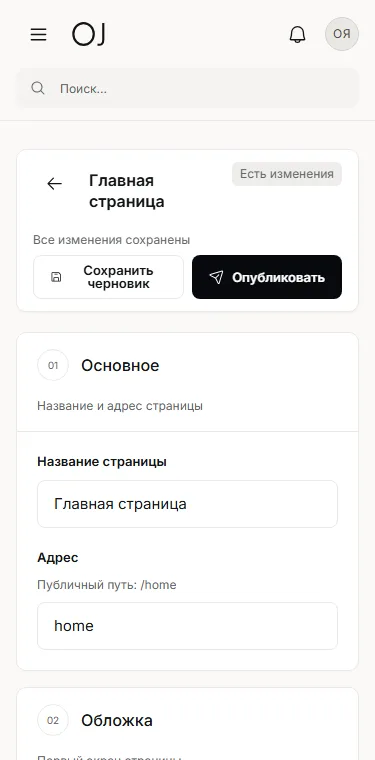
After launch, a business needs to change pages, publish news, and find images without a developer. A typical admin shows collections and system fields; an editor needs a clear workflow. I built OJ CMS around the person who keeps the site current.
Editors need a clear workflow
I designed the overview, pages, news, media and settings around editorial tasks. The demo stores changes in the browser and shows that workflow. At KEMZ, Payload already provides server storage, permissions and publishing within the live implementation.
 DRAFT → PUBLISH
A real editor, not an admin mockup
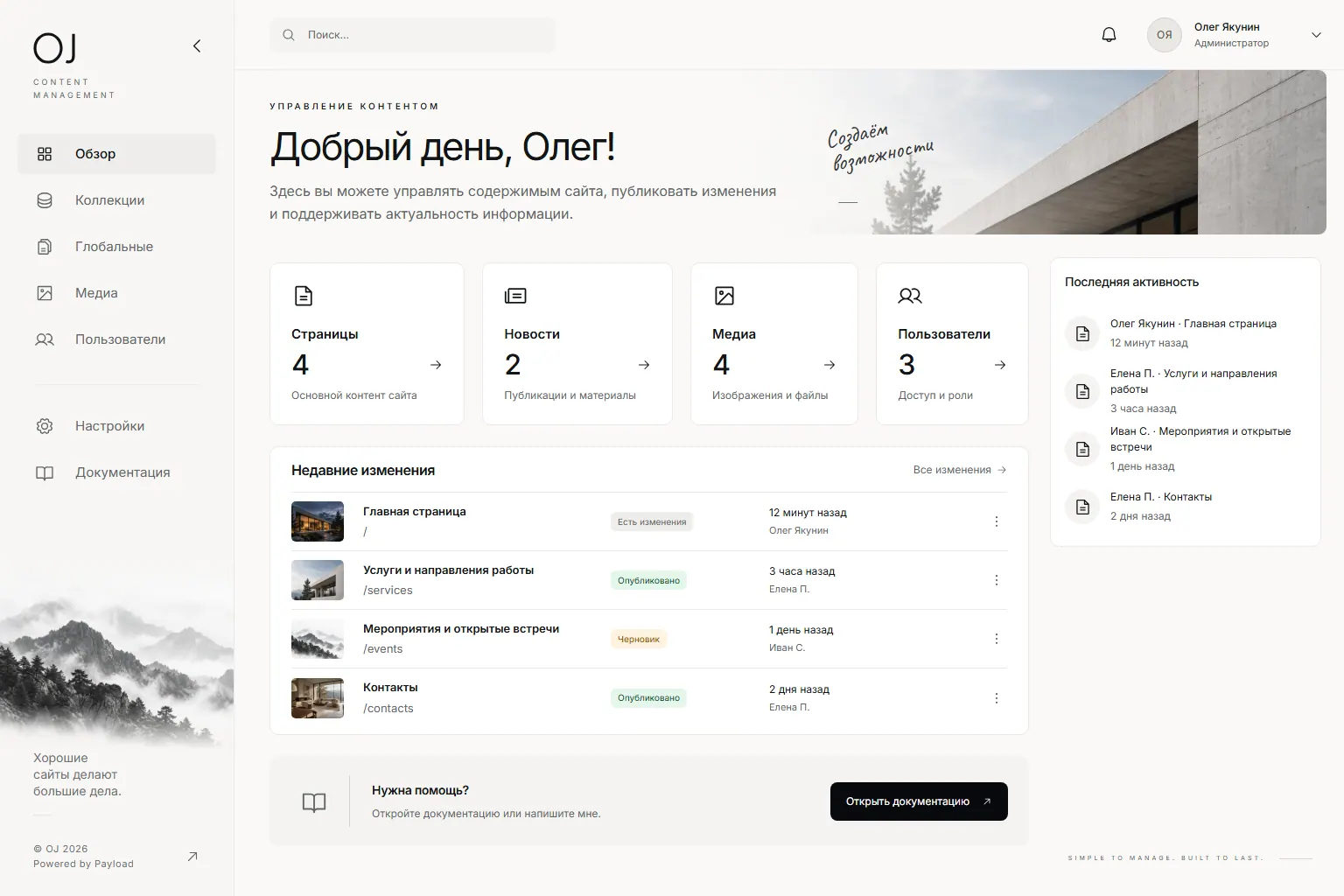
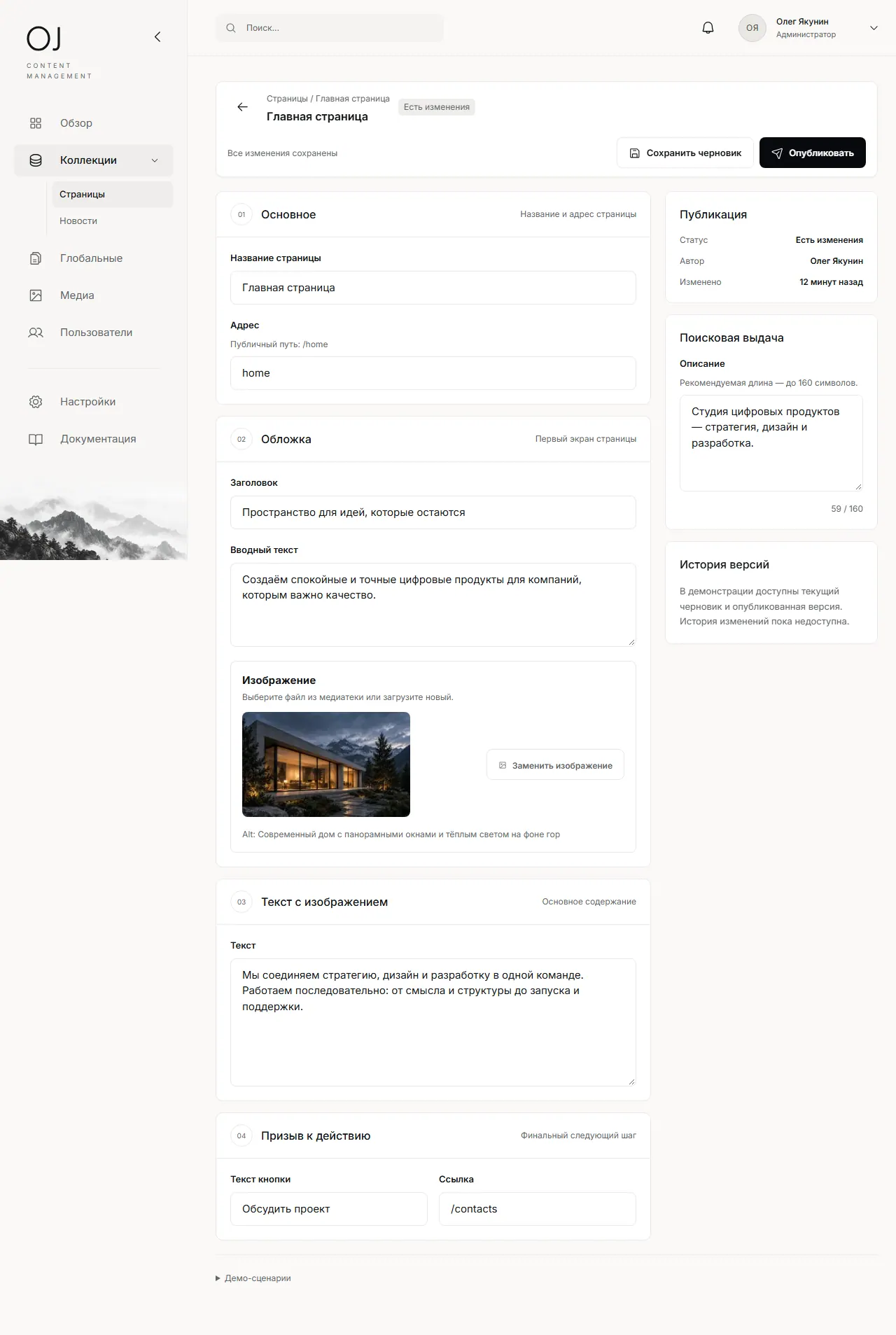
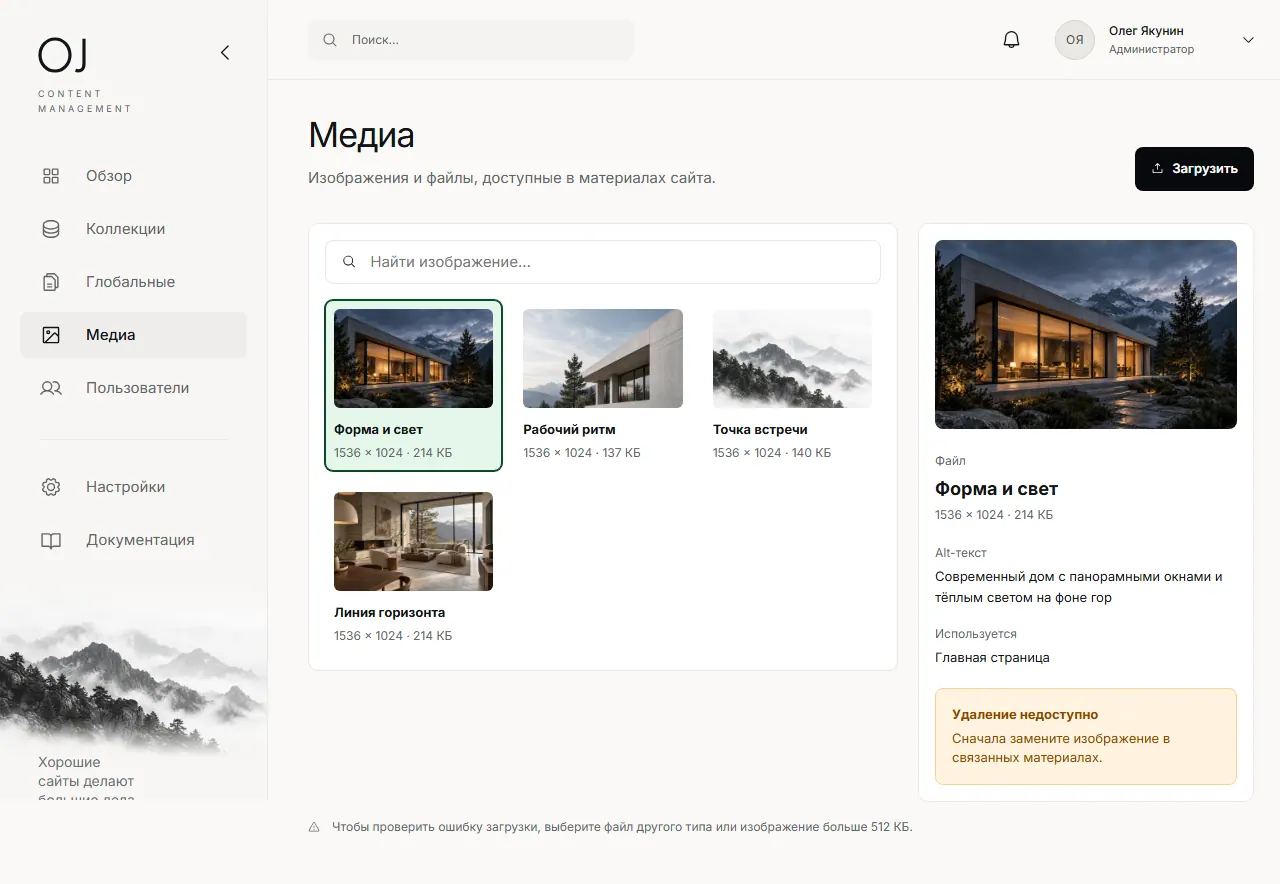
These screens show the working OJ CMS demo: overview, page editor, and media library.
Overview
Quick access to pages, news, media, and users. Recent changes and activity appear on the home screen.
Editor
Save a draft, review it, then publish. Unsaved changes do not silently disappear.
Media library
Images have names and usage links. The system warns when a file is already in use.
OJ CMS / LIVE AT KEMZ
Catalog, inquiries and analytics in one dashboard
For the KEMZ website on Next.js and React, I integrated Payload and adapted OJ CMS to the factory’s workflows. These are actual implementation screens.
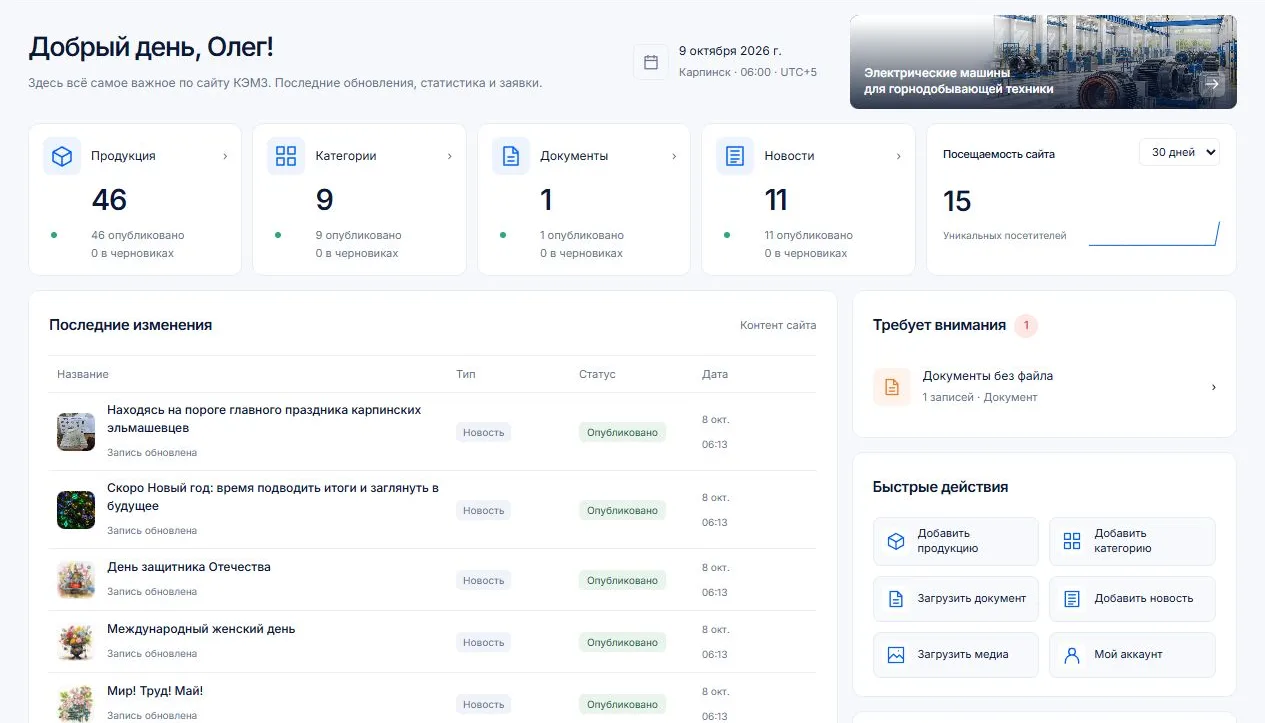
Content and catalog
Products, categories, news and documents live in OJ CMS, built on Payload. Content has publishing states, and product edits can be saved as drafts.
Inquiries in the CMS
Website inquiries are saved before an email notification is sent. Editors can view them; processing and deletion are reserved for administrators.
Analytics alongside content
The Yandex Metrika API brings visitors, visits, page views and popular pages into the dashboard, with a selectable reporting period.
Every change has a clear status
The demo distinguishes drafts, published pages and changes since publication. You can switch roles to see the editor's view. A production integration must enforce access on the server and in the API.
From a demo to the live KEMZ site
OJ CMS is deployed on the Next.js KEMZ website: Payload storage, catalog, news, documents, saved inquiries and Metrika analytics. The browser demo remains a separate way to explore the editor without access to client data.
Discuss a project like OJ CMS
Tell me about your idea. I will suggest a design direction, architecture and first steps.